Month: September 2025

  • 0

dyson dc39 user guide

Category : Guide

Welcome to the Dyson DC39 user guide, your comprehensive resource for understanding and optimizing your vacuum cleaner. This guide provides detailed instructions to ensure safe, efficient, and effective use of your Dyson DC39, helping you maintain a cleaner home with ease.

Overview of the Dyson DC39 Vacuum Cleaner

The Dyson DC39 is a versatile and powerful vacuum cleaner designed to simplify cleaning tasks across various surfaces. With its advanced suction technology, it effortlessly captures dirt, dust, and debris from carpets and hard floors. Lightweight and ergonomic, this cylinder vacuum offers easy maneuverability, making it ideal for multi-floor cleaning. Its compact design and robust construction ensure durability, while the range of attachments and tools provide versatility for different cleaning needs. The DC39 is a popular choice for homeowners seeking efficient and reliable cleaning solutions. Available user manuals and guides further enhance its usability, ensuring users can maximize its potential for a cleaner and healthier living environment.

Importance of Reading the User Guide

Reading the Dyson DC39 user guide is crucial for ensuring optimal performance and safety. The guide provides essential information on proper usage, maintenance, and troubleshooting, helping you maximize the vacuum’s potential. It outlines safety precautions, such as avoiding use near water or by unsupervised children, and highlights recommended practices to prevent damage or hazards. By following the guide, you can extend the lifespan of your appliance and maintain its efficiency. Additionally, the manual offers tips for effective cleaning and guides you through assembly and operation, making it an indispensable resource for first-time users. Familiarizing yourself with the content ensures a safer and more efficient cleaning experience, tailored to your specific needs.

Safety Instructions

Always follow safety guidelines to ensure safe operation. Avoid using the vacuum near water, keep it out of reach of children, and prevent overheating by proper usage.

General Safety Precautions

To ensure safe operation of the Dyson DC39, always follow these guidelines: Avoid using the vacuum near water or in damp environments, as this can cause electrical hazards. Keep the appliance out of reach of children and pets to prevent accidental injuries. Never leave the vacuum unattended while it is in use. Ensure the power cord is not damaged or tangled, as this could lead to electrical issues. Avoid vacuuming flammable materials, hot ashes, or sharp objects, as they may damage the machine or pose a fire risk. Always turn off and unplug the vacuum before performing any maintenance or cleaning. Use only genuine Dyson parts to maintain safety and performance. Store the vacuum in a cool, dry place when not in use.

Proper Usage Guidelines

For optimal performance and longevity of the Dyson DC39, adhere to these usage guidelines: Always use the vacuum on surfaces it is designed for, such as carpets, rugs, hard floors, and upholstery. Adjust the suction power according to the surface type using the control button. Regularly empty the dustbin to maintain suction efficiency and prevent motor strain. Use the crevice tool for tight spaces and the brush tool for delicate surfaces. Avoid vacuuming large debris, liquids, or heavy objects that could damage the machine. Ensure the vacuum is moved smoothly and not dragged roughly, as this may harm the motor or wheels. Store the vacuum upright when not in use to prevent dust and debris from spilling. Refer to the Dyson DC39 user guide for specific instructions on using attachments and settings.

Precautions for Use Around Children and Pets

When using the Dyson DC39 around children and pets, exercise caution to ensure safety. Keep children away from the vacuum while it is in operation, as they may accidentally touch moving parts or get startled by the noise. Avoid letting children play with the machine or its attachments. For pets, use the vacuum when they are not in the same room, as the noise may frighten them. Never vacuum pet hair or small toys, as this could damage the machine or create a choking hazard. Store the vacuum and its accessories out of reach of children and pets to prevent accidental damage or injury. Always supervise the vacuum’s use in households with children or pets and ensure the child safety lock is activated when not in use.

Unboxing and Assembly

Carefully unpack the Dyson DC39 and ensure all components are included. Identify the main unit, wand, crevice tool, and brush. Snap parts securely together for proper assembly.

Contents of the Box

Upon opening the box, you’ll find the Dyson DC39 vacuum cleaner, a wand attachment, crevice tool, and upholstery brush. Additional components include the combination tool, motorized floor attachment, and a quick-release adaptor. The box also contains a user guide, warranty information, and a quick-start guide. All parts are neatly organized to ensure easy identification and assembly. Dyson ensures every accessory is included to cater to various cleaning needs. Before proceeding, verify all items are present to avoid missing any essential components. This comprehensive packaging reflects Dyson’s focus on innovation and user convenience, providing everything needed for efficient cleaning.

Step-by-Step Assembly Process

Begin by attaching the wand handle to the vacuum cleaner’s main body. Align the wand’s connector with the vacuum’s inlet and click it into place. Next, connect the hose to the wand, ensuring it is securely fastened. Attach the motorized floor tool to the wand’s end, making sure it clicks firmly. For additional tools like the crevice tool or upholstery brush, simply slide them onto the wand’s connector until they lock in place. Double-check all connections to ensure they are tight and secure. Finally, plug in the vacuum and test it to confirm proper assembly. If any part feels loose, refer to the user guide for adjustment instructions. Proper assembly ensures optimal performance and safety.

Operating the Dyson DC39

Plug in the Dyson DC39, press the power button, and adjust suction control as needed. Glide effortlessly across carpets, hard floors, and upholstery with its lightweight design. The ergonomic handle ensures comfortable maneuverability, while the instant tool-release feature allows quick switching between attachments for versatile cleaning tasks. Move seamlessly from one surface to another, capturing dust and allergens efficiently with minimal effort required.

Understanding the Machine Components

The Dyson DC39 features a sleek, lightweight design with key components that enhance its performance. The digital motor provides powerful suction, while the cyclone technology captures dust and dirt efficiently. The dustbin is transparent, allowing you to monitor debris levels, and detaches easily for emptying. The filter, located inside the dustbin, helps trap allergens and improve air quality. Additional tools like the crevice tool, upholstery brush, and motorized floor tool attach seamlessly for versatile cleaning tasks; The wand and hose offer flexible reach, making it easy to clean stairs, curtains, and tight spaces. Familiarizing yourself with these components ensures optimal use and maintenance of your Dyson DC39 vacuum cleaner.

Starting the Vacuum Cleaner

To start the Dyson DC39, ensure the machine is properly assembled and the dustbin is securely attached. Plug the vacuum into a nearby power outlet and press the power button, located on the handle. The motor will activate, and you can adjust the suction power using the slider on the handle for different cleaning tasks. Before use, always check for blockages in the wand, hose, or other attachments. Ensure the dustbin is not full and the filter is clean. For optimal performance, empty the dustbin and clean or replace the filter as needed. If using a motorized tool, attach it securely to the wand. The vacuum is now ready to clean various surfaces, from carpets to hard floors, with ease and efficiency.

Using Different Attachments and Tools

The Dyson DC39 comes with a variety of attachments designed for specific cleaning tasks. The crevice tool is ideal for tight spaces, such as between furniture cushions or along baseboards. The brush tool is perfect for gently cleaning upholstery, stairs, or delicate surfaces. For hard floors and carpets, the motorized floor tool provides efficient cleaning with its rotating brush bar. To use an attachment, simply click it into place on the wand until it locks securely. Switch between tools as needed to tackle different areas of your home. Regularly cleaning the attachments ensures optimal performance and prevents dust buildup. This versatility allows you to adapt the vacuum to various cleaning challenges, making it a reliable choice for maintaining a spotless environment.

Maintenance and Care

Regularly inspect and clean the Dyson DC39 to ensure optimal performance. Check for blockages, clean filters, and store the vacuum in a dry, cool place for longevity.

Emptying the Dustbin

To maintain your Dyson DC39’s performance, regularly empty the dustbin. Press the release button located at the top of the canister to detach it from the vacuum. Carefully pour the contents into a trash bin, ensuring no debris remains. Avoid tapping or shaking the dustbin excessively, as this could damage it. For stubborn particles, gently clean the interior with a soft cloth. Do not wash the dustbin with water, as it may damage the internal components. After emptying, reattach the dustbin securely to the vacuum. Regular emptying prevents dust buildup and helps maintain optimal suction power. Always handle the dustbin with care to ensure longevity and efficiency of your Dyson DC39 vacuum cleaner.

Cleaning and Replacing the Filter

To keep your Dyson DC39 performing optimally, regular filter maintenance is essential. The filter is washable and should be cleaned every 1-2 months, depending on usage. Remove the filter from the vacuum and gently tap it to release loose debris. Rinse it under cold water without using soap or detergents, as these can damage the material. Allow the filter to air dry completely before reinstalling it. If the filter is damaged or shows signs of wear, replace it with a genuine Dyson replacement. Cleaning and replacing the filter ensures consistent suction power and prevents dust and allergens from being released back into the air. Always follow the manufacturer’s guidelines for filter care to maintain your vacuum’s efficiency and longevity.

Checking for Blockages

Regularly checking for blockages in your Dyson DC39 is crucial to maintain its performance. Start by inspecting the wand, hose, and other attachments for any obstructions. Use a torch to visually examine the interior of the wand and hose for dust, hair, or debris buildup. If a blockage is found, disconnect the affected part and carefully remove the obstruction. For stubborn blockages, gently flex the hose or use a soft brush to dislodge debris. Ensure all parts are reconnected securely after clearing blockages. If the issue persists, refer to the troubleshooting section for further guidance. Regular checks help prevent reduced suction power and ensure your vacuum operates efficiently. Always handle the machine with care to avoid damaging internal components during the process.

Troubleshooting Common Issues

This section helps diagnose and resolve common problems with the Dyson DC39, such as loss of suction, strange noises, or malfunctioning components. Follow the guidance here to identify and address issues effectively, ensuring your vacuum operates at its best performance level.

Loss of Suction Power

If your Dyson DC39 experiences a loss of suction power, there are several potential causes. First, check for blockages in the hose, wand, or vacuum inlet. Remove any debris or hair tangled around these areas. Next, ensure the dustbin is empty, as a full bin can restrict airflow. Clean or replace the pre-filter and post-filter if they are dirty or clogged, as this can significantly reduce suction. Additionally, inspect the cyclone for blockages and clean it if necessary. If the issue persists, check for damage to the seals or gasket, as leaks can cause suction loss. Regular maintenance, such as washing filters and ensuring all parts are securely attached, will help maintain optimal performance. Refer to the troubleshooting section for further guidance.

Strange Noises or Smells

If your Dyson DC39 emits strange noises or unpleasant smells, it may indicate an issue requiring attention. Check for blockages in the hose, wand, or other components, as debris can cause unusual sounds. A damaged or worn belt or misaligned parts might also produce noise. For smells, inspect the dustbin and filters for dirt or mold buildup. Empty the dustbin regularly and wash filters as recommended. If the vacuum overheats, it may emit a burning odor; unplug it and allow it to cool. Addressing these issues promptly can prevent further damage. If the problem persists after cleaning and maintenance, contact Dyson customer support for assistance. Regular upkeep helps maintain performance and prevents such issues from arising.

Frequently Asked Questions

  • How often should I empty the dustbin? Empty the dustbin after each use to maintain suction power and prevent dust buildup.
  • Can I wash the filter? Yes, the filter can be washed with cold water, but ensure it is completely dry before reinstalling.
  • Why is the vacuum making a blue light? The blue light indicates the battery is charging or fully charged;
  • What if the vacuum overheats? Turn it off, unplug it, and allow it to cool before restarting.
  • Where can I find replacement parts? Visit Dyson’s official website or contact customer support for genuine replacement parts.

The Dyson DC39 user guide has provided a comprehensive overview of how to use, maintain, and troubleshoot your vacuum cleaner effectively. By following the safety instructions, assembly steps, and maintenance tips outlined in this guide, you can ensure optimal performance and longevity of your device. Regular cleaning of the filter, emptying the dustbin, and checking for blockages will keep your Dyson DC39 running efficiently. If you encounter any issues, refer to the troubleshooting section or consult Dyson’s customer support. With proper care, your Dyson DC39 will continue to deliver powerful suction and reliable cleaning results for years to come. Happy cleaning!



  • 0

nikon d3100 instruction manual

Category : Manuals

Welcome to the Nikon D3100 user manual, your comprehensive guide to unlocking the potential of this versatile DSLR camera. Designed for beginners, it offers intuitive controls, a 14.2 MP CMOS sensor, and Full HD video recording. With its Guide Mode, the D3100 simplifies photography, making it ideal for learners seeking to enhance their skills.

1.1 Overview of the Nikon D3100 Camera

The Nikon D3100 is an entry-level DSLR camera designed for beginners and photography enthusiasts. It features a 14.2-megapixel CMOS sensor, EXPEED 2 image-processing engine, and Full HD video recording. Lightweight and compact, the D3100 is easy to handle, making it ideal for everyday use. Its intuitive interface, including the Guide Mode, helps users understand and apply various camera settings. The camera supports a wide range of NIKKOR lenses, offering flexibility for different shooting scenarios. With its robust build and user-friendly design, the D3100 is a great tool for capturing high-quality images and videos. It’s perfect for those looking to transition from point-and-shoot cameras to a more advanced DSLR experience.

1.2 Key Features of the Nikon D3100

The Nikon D3100 boasts a 14.2-megapixel CMOS sensor, delivering sharp and detailed images. It features the EXPEED 2 image-processing engine for enhanced performance and color accuracy. The camera supports Full HD video recording at 1080p, making it ideal for capturing high-quality movies. A 3-inch LCD screen provides a clear view for previewing and reviewing shots. The D3100 also includes Live View mode for easier composition and an 11-point autofocus system for precise subject tracking. With an ISO range of 100-3200, it performs well in various lighting conditions. The camera’s Guide Mode simplifies complex settings, helping beginners improve their photography skills. Additionally, it supports a wide range of NIKKOR lenses, offering versatility for different shooting styles. Built-in pop-up flash and compatibility with external flash units further expand its capabilities, making it a versatile tool for both stills and video.

Camera Overview

The Nikon D3100 is an entry-level DSLR designed for photography enthusiasts, offering a balance of performance and simplicity. It features intuitive controls and Guide Mode for easy learning, ensuring high-quality images across various shooting conditions.

2.1 Physical Features of the Nikon D3100

The Nikon D3100 is a compact and lightweight DSLR camera, designed for ease of use and portability. Its durable plastic body provides a comfortable grip, making it easy to handle during extended shooting sessions. The camera features a 3-inch TFT LCD screen with 230,000 dots, offering a clear view of images and settings. The optical viewfinder, while not as large as higher-end models, provides a decent preview of the scene. The D3100 also includes a built-in pop-up flash, ideal for casual photography and fill lighting. Its physical controls are intuitively laid out, with a mode dial on top for quick access to shooting modes. Overall, its ergonomics and design make it an excellent choice for beginners and casual photographers.

2.2 Technical Specifications of the Nikon D3100

The Nikon D3100 features a 14.2-megapixel CMOS sensor, delivering crisp and detailed images. It supports a wide ISO range of 100 to 12,800, enabling excellent low-light performance. The camera is equipped with an 11-point autofocus system, ensuring precise and rapid subject tracking. Video recording is available in Full HD (1080p) at 24 frames per second, with the option to capture HD (720p) at 30 or 24 frames per second. The D3100 uses SD, SDHC, and SDXC memory cards for storage. It also includes a rechargeable EN-EL8 lithium-ion battery, providing up to 550 shots per charge. The camera’s EXPEED 2 image processor enhances image quality and processing speed, making it a reliable choice for both still photography and video recording.

Getting Started with the Nikon D3100

Welcome to the Nikon D3100 setup guide. This section covers unboxing, initial setup, battery charging, lens mounting, and basic configurations to help you start capturing stunning photos effortlessly.

3.1 Unboxing and Initial Setup

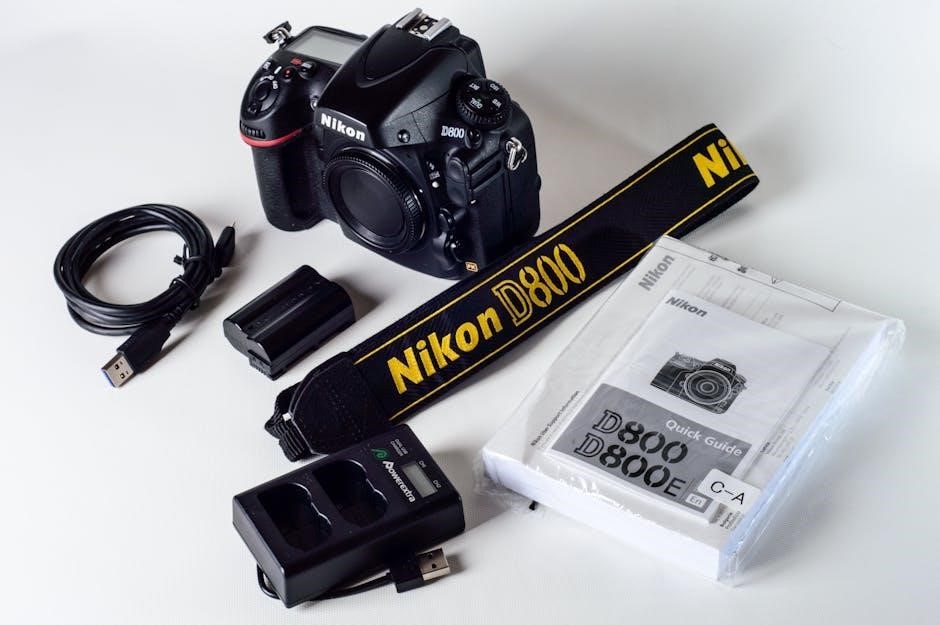
Welcome to the unboxing and initial setup section of your Nikon D3100 instruction manual. Carefully unpack your camera, ensuring all accessories are included, such as the battery, charger, strap, and lens. Begin by charging the battery fully before first use. Next, attach the strap for secure handling. Mount the provided lens by aligning the mounting index on the lens with the white dot on the camera body, then twist gently to secure. Power on the camera and follow the on-screen prompts to set your language, date, and time. Familiarize yourself with the camera’s controls and modes. This guide will walk you through each step, ensuring a smooth transition into capturing stunning photographs with your Nikon D3100.

3.2 Charging the Battery

To ensure optimal performance, charge the Nikon D3100’s battery before first use. Locate the provided MH-24 charger and plug it into a power source. Insert the battery into the charger, aligning the terminals correctly. The charging indicator will turn red, switching to green when fully charged, which typically takes about 2 hours. Avoid overcharging, as it may reduce battery longevity. Once charged, remove the battery from the charger and insert it into the camera’s battery compartment, located at the base. Close the compartment securely. For best results, use only Nikon-approved batteries and chargers to maintain performance and safety. If using the camera for the first time, allow the battery to charge completely before capturing images.

3.3 Mounting the Lens

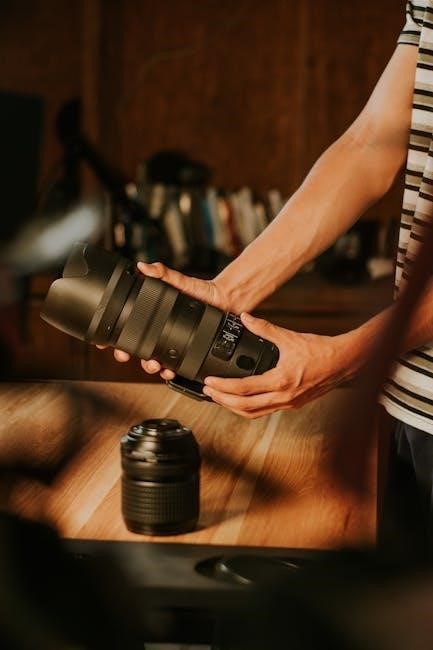
Mounting the lens on your Nikon D3100 is a straightforward process that requires attention to detail to ensure proper alignment and secure attachment. Begin by turning off the camera to prevent any accidental power issues. Locate the lens mount on the camera body, which is the circular metal part where the lens will attach. On the lens, you’ll find a similar mount with a white dot or alignment marker. Align this marker with the corresponding marker on the camera body to ensure proper positioning.

Hold the lens by its ridge and support it from underneath to prevent dropping. Gently align the lens with the camera mount, making sure the white dots match up. Once aligned, twist the lens clockwise until it clicks into place, ensuring it is snug and secure. Avoid touching the camera’s mirror or sensor to prevent damage. After mounting, check the lens by gently tugging on it to ensure it is properly secured. If it feels loose, tighten it slightly until it feels firm.

Finally, turn the camera back on and you’re ready to start shooting. Remember to handle the lens with care, avoiding contact with the glass elements and keeping the area clean to prevent dust from entering the camera. Regular cleaning with a lens cloth can help maintain image quality by preventing dust spots. With practice, lens mounting will become a quick and confident process, allowing you to focus on capturing your best shots.

Shooting Modes

The Nikon D3100 offers various shooting modes to suit different photography needs, ranging from automatic settings for ease to manual controls for creative freedom. Scene modes further enhance versatility for specific genres like portraits, landscapes, and sports, allowing photographers to capture stunning images with precision and artistry.

4.1 Understanding Auto Mode

Auto Mode on the Nikon D3100 is designed for hassle-free photography, automatically adjusting settings like aperture, shutter speed, and ISO to capture well-balanced images in various lighting conditions. The camera analyzes the scene and selects optimal settings, making it ideal for beginners or quick shots. In Auto Mode, the D3100 also enables the Scene Auto Selector, which detects the type of scene (e.g., portrait, landscape, or close-up) and adjusts settings accordingly. Users have limited manual control in this mode, but it ensures consistent results without requiring technical knowledge. This mode is perfect for those who want to focus on composition and creativity while letting the camera handle the technicalities.

4.2 Exploring Manual Mode

Manual Mode on the Nikon D3100 offers full creative control, allowing photographers to independently adjust aperture, shutter speed, and ISO sensitivity. This mode is ideal for experienced users who want precise control over their images; By using the command dial, you can adjust aperture and shutter speed to achieve desired effects, such as motion blur or depth of field. Manual Mode also enables bracketing for capturing multiple exposures of the same scene at different settings. While it requires a good understanding of photography basics, Manual Mode provides the flexibility to tailor settings to specific creative goals. It’s perfect for advanced photographers seeking customization and artistic expression in their work.

4.3 Using Scene Modes

Scene Modes on the Nikon D3100 allow you to capture photos tailored to specific situations by automatically adjusting camera settings. Modes like Portrait, Landscape, Night Portrait, Close-up, and Sports optimize settings for ideal results. For example, Portrait mode softens backgrounds to emphasize subjects, while Landscape mode enhances detail and color in wide scenes. Night Portrait combines flash with longer shutter speeds to capture both subject and background. Close-up mode minimizes depth of field for macro shots, and Sports mode freezes fast-moving subjects. These modes simplify photography by letting the camera handle complex adjustments, ensuring professional-looking results without manual tweaking. Refer to the user manual for a full list of Scene Modes and their applications.

Camera Settings

The Nikon D3100 offers customizable settings to refine your photography experience. Adjust aperture, shutter speed, and ISO to control exposure. White balance and file formats can also be modified to suit your needs.

5.1 Adjusting Aperture

Aperture is a critical camera setting that controls the amount of light entering the lens. On the Nikon D3100, aperture is adjusted using the aperture button (marked with an “f”) and the command dial. Aperture values, or f-stops, are measured in numbers like f/2.8 or f/16. A lower f-stop (e.g., f/2.8) means a larger aperture, allowing more light and a shallower depth of field, while a higher f-stop (e.g., f/16) results in a smaller aperture, less light, and a deeper depth of field. Aperture priority mode (A) allows you to set the aperture manually, with the camera adjusting the shutter speed accordingly. Experimenting with aperture settings helps achieve desired effects, such as blurred backgrounds or sharp landscapes.

5.2 Setting Shutter Speed

Shutter speed determines how long the camera’s shutter remains open, measured in seconds or fractions of a second. On the Nikon D3100, you can adjust the shutter speed using the shutter-release button and the command dial. Faster shutter speeds (e.g., 1/1000th of a second) are ideal for freezing fast-moving subjects, while slower speeds (e.g., 1 second) create motion blur. In Manual (M) mode, you can set the shutter speed independently, while in Shutter Priority (S) mode, the camera adjusts the aperture automatically. Experimenting with different shutter speeds allows you to capture dynamic effects, such as sharp action shots or artistic blurring of water or clouds. Understanding shutter speed is essential for achieving the desired visual impact in your photography.

5.3 Managing ISO Sensitivity

ISO sensitivity controls the camera’s light sensitivity, with lower values (ISO 100-400) suitable for bright conditions and higher values (ISO 1600-6400) for low light. On the Nikon D3100, you can adjust ISO via the menu or using the ISO button and command dial. Lower ISOs provide sharper images with less noise, while higher ISOs introduce grain but allow shooting in darker environments. For best results, use the lowest ISO necessary for your lighting conditions to minimize noise. In Auto ISO mode, the camera adjusts sensitivity automatically, but manual control offers more creative flexibility. Experiment with ISO settings to balance image quality and low-light performance effectively.

5.4 White Balance Settings

White balance adjusts the color temperature of your images to ensure accurate color representation under various lighting conditions. The Nikon D3100 offers multiple white balance modes, including Auto, Daylight, Incandescent, Fluorescent, Cloudy, and Shade. Each mode compensates for the color cast of different light sources. For example, Daylight mode is ideal for outdoor shooting, while Incandescent is suited for indoor lighting. Fluorescent mode includes seven sub-settings to accommodate different types of fluorescent lights. You can also set a custom white balance using the PRESET option by capturing a reference image of a neutral object. This ensures precise color accuracy in tricky lighting situations. Experiment with these settings to achieve natural-looking colors in your photos.

Accessories for the Nikon D3100

Accessories like lenses, tripods, and memory cards enhance functionality. Additional gear includes remote shutters and camera bags for convenience and improved photography experiences.

6.1 Compatible Lenses

The Nikon D3100 is compatible with a wide range of Nikon F-mount lenses, offering flexibility for various photography needs. The AF-S DX NIKKOR 18-55mm f/3.5-5.6 VR is a popular kit lens. Additionally, photographers can opt for prime lenses like the AF-S DX NIKKOR 35mm f/1.8G for portraits or zoom lenses like the AF-S DX NIKKOR 55-200mm f/4-5.6 VR for telephoto shots. Wide-angle lenses, such as the AF-S DX NIKKOR 10-24mm f/3.5-4.5G, are ideal for landscapes. Nikon lenses ensure optimal image quality and compatibility with the D3100’s features. Third-party lenses from brands like Sigma and Tamron are also available but require compatibility verification. Choosing the right lens enhances creativity and performance, making it essential to explore options based on photographic goals.

6.2 Using a Tripod

A tripod is an essential accessory for the Nikon D3100, providing stability and reducing camera shake, especially in low-light conditions or when using slower shutter speeds. To use a tripod, locate the 1/4-inch tripod mount on the camera’s base and secure it to the tripod head. Ensure the tripod is level and stable for optimal results. Using a tripod enables sharper images, allows for better composition, and minimizes blur caused by hand movement. It is particularly useful for long exposures, time-lapse photography, or when using telephoto lenses. For additional stability, consider using the camera’s timer or remote shutter release. Always choose a sturdy tripod that supports the weight of your camera and lens setup. This accessory is a must-have for serious photographers aiming to improve image quality and creativity.

6.3 Memory Cards and Storage

The Nikon D3100 supports SD, SDHC, and SDXC memory cards, offering flexible storage options for your photos. When selecting a memory card, choose a high-speed Class 6 or higher for optimal performance, especially when using burst mode or recording video. Insert the memory card into the camera’s card slot, located on the bottom near the battery compartment. Always format the memory card in the camera menu before use to ensure compatibility and prevent data corruption. For organization, consider using multiple smaller-capacity cards rather than a single large one to minimize data loss in case of card failure. Regularly back up your images to a computer or external storage device to safeguard your work. Proper storage and management of memory cards are crucial for maintaining the integrity and accessibility of your photos.

6.4 Remote Shutter Release

The Nikon D3100 is compatible with the MC-DC2 remote cord, allowing for remote shutter release. This accessory reduces camera shake and is ideal for tripod-based photography or self-portraits. Connect the remote to the camera’s accessory terminal, located on the side of the body. Once connected, press the remote’s shutter button to capture images. Using a remote ensures sharp photos by eliminating vibrations caused by manual shutter pressing. It’s particularly useful in low-light conditions or when using long exposures. For added convenience, the remote also supports the camera’s self-timer function. Always store the remote securely to avoid damage or misplacement. This feature enhances precision and flexibility, making it a valuable tool for photographers seeking professional results.

Maintenance and Care

Regularly clean the camera and lens to prevent dust and smudges. Store the D3100 in a dry, cool place and avoid extreme temperatures. Check for firmware updates to ensure optimal performance and security.

7.1 Cleaning the Camera and Lens

Cleaning the Nikon D3100 and its lens is essential for maintaining image quality. Use a soft, dry cloth to wipe the camera body, avoiding harsh chemicals. For the lens, gently remove dust with a blower or soft brush. Dampen a microfiber cloth with distilled water, but avoid touching the lens surface excessively. Never use tissues or paper towels, as they may scratch the lens. For stubborn smudges, apply a small amount of lens cleaning solution to the cloth, not the lens. Avoid touching the camera’s sensor; if cleaning is necessary, enable the camera’s cleaning mode; Regular cleaning prevents dust buildup and ensures sharp, clear photos. Always handle the camera and lens with care to avoid damage.

7.2 Updating Firmware

Updating the firmware of your Nikon D3100 ensures optimal performance and unlocks new features. Visit Nikon’s official website to check for the latest firmware version. Download the update to your computer, then transfer it to a memory card using a card reader. Insert the card into the camera, go to the setup menu, and select Firmware Version to begin the update. Use a fully charged battery or connect the camera to an AC adapter to prevent interruptions. Do not turn off the camera during the process, as this could cause permanent damage. After completion, verify the firmware version in the menu to confirm success. Regularly checking for updates ensures your camera operates at its best.

Troubleshooting Common Issues

Troubleshooting the Nikon D3100 involves identifying and resolving issues like battery drain, blurry images, or card errors. Check power sources, memory cards, and settings to ensure proper functionality. If problems persist, consult the user manual or contact Nikon support for assistance. Regular maintenance and updates can prevent many common issues. Always refer to the troubleshooting guide in the manual for specific solutions to ensure your camera operates smoothly.

8.1 Resolving Battery Issues

If you encounter battery issues with your Nikon D3100, start by ensuring the battery is fully charged using the provided charger. Avoid overcharging, as it can reduce battery life. If the battery doesn’t charge, clean the contacts on both the battery and camera to remove dirt or corrosion. Use only Nikon-approved chargers and batteries to prevent compatibility problems. If the issue persists, try resetting the camera by removing the battery and memory card for 30 seconds. In some cases, updating the camera firmware may resolve battery-related errors. If none of these steps work, the battery may need replacement. Always refer to the manual for specific troubleshooting steps to ensure optimal performance and longevity of your Nikon D3100’s battery.

8.2 Fixing Autofocus Problems

If your Nikon D3100 is experiencing autofocus issues, start by ensuring the AF-mode is set correctly. Select AF-C for moving subjects or AF-S for stationary ones. Check the AF-area mode and ensure it matches your shooting scenario. Clean the lens and camera sensor, as dirt or smudges can interfere with autofocus. Verify that the lens is properly mounted and compatible with the D3100. If issues persist, reset the camera to its default settings or update the firmware. In low-light conditions, use the built-in AF-assist light to improve focus accuracy. Avoid using third-party lenses that may not fully support Nikon’s autofocus system. If the problem remains unresolved, contact a Nikon service center for professional assistance.

Advanced Techniques

  • Bracketing: Capture multiple exposures of the same scene to merge later for HDR images.
  • Focus Stacking: Combine shots with different focus points for extended depth of field.
  • Panning: Track moving subjects to create sharp images with blurred backgrounds.
  • RAW Format: Shoot in RAW for better post-processing flexibility.
  • Manual Focus: Use manual focus for precise control over your images.

9.1 Mastering Autofocus

The Nikon D3100 features an 11-point autofocus system, offering precise control over focus acquisition. Use the AF mode selector to choose between AF-A (auto-servo AF), AF-S (single-servo AF), and AF-C (continuous-servo AF). AF-A automatically switches between AF-S and AF-C based on subject movement, while AF-S is ideal for stationary subjects and AF-C for moving ones. The camera also includes AF-area modes: Single Point, Dynamic Area, and Auto Area. Single Point allows manual selection of one AF point, Dynamic Area uses a group of points, and Auto Area lets the camera automatically select. For improved accuracy, use the Multi-CAM 1000 autofocus module and ensure the lens is compatible with AF-S or AF-I. Clean the lens regularly to maintain optimal autofocus performance.

9.2 Understanding Bracketing

Bracketing on the Nikon D3100 allows you to capture a series of images at different exposures, ideal for high-contrast scenes. The camera offers Auto Bracketing (BKT) via the Shooting Menu. Set the number of frames (3) and exposure increments (up to 2 EV) based on your needs. This feature is useful for HDR (High Dynamic Range) photography. After enabling, the camera takes three shots: one at the current setting, one underexposed, and one overexposed. Use the Multi Selector to choose the BKT option and adjust settings. Review the images using the playback menu. Bracketing ensures you capture a wider tonal range, enhancing dynamic range in challenging lighting conditions. For best results, use a tripod to maintain camera stability during the process.

The Nikon D3100 is a versatile and user-friendly DSLR, offering advanced features for entry-level photographers. Its intuitive design and comprehensive guides ensure mastery and confidence in photography.

10.1 Summary of Key Features

The Nikon D3100 is an entry-level DSLR camera designed for photography enthusiasts. It features a 14.2-megapixel CMOS sensor, EXPEED 2 image-processing engine, and ISO sensitivity up to 3200. The camera offers an 11-point autofocus system, 3-inch LCD screen, and HD video recording capabilities. Its Guide Mode simplifies complex settings, making it ideal for beginners. The D3100 supports a wide range of AF-S Nikkor lenses, ensuring versatility in various shooting scenarios. With its compact design and user-friendly interface, the D3100 is a great tool for capturing high-quality images and learning photography fundamentals. Its features balance simplicity and functionality, catering to both new and intermediate photographers.

10.2 Resources for Further Learning

To deepen your understanding of the Nikon D3100, explore official Nikon resources, including the Nikon website and the downloadable user manual. Online forums like Nikonians and DPReview offer valuable insights and user experiences. YouTube channels such as Tony Northrup and CameraRecycle provide tutorials and tips tailored for the D3100. Additionally, consider enrolling in online photography courses on platforms like Udemy or Coursera, which cover DSLR basics and advanced techniques. For hands-on learning, join local photography workshops or clubs. Lastly, eBooks and guides specific to the Nikon D3100, such as “Nikon D3100: From Snapshots to Great Shots,” offer in-depth guidance. These resources will help you master your camera and enhance your photography skills.